Russian Salmon Fund
We are confident that through joint efforts of scientists, fishing enthusiasts and government officials we will be able to preserve the diversity of salmon fish in quantities sufficient for game and commercial fishing.
Our mission
Using modern and scientifically sound methods to explore, understand and preserve the diversity of the natural ecosystem of salmon in Russia. Creating a new public attitude towards wildlife, helping a long and harmonious coexistence of salmon and humans to become a reality.
Russian Salmon Fund Mission Statement:
Applying the most current and scientifically based methodology – to study, understand and preserve the full range of diversity of salmon ecosystems on the territory of Russia. Formulating a new civic attitude towards nature, enabling a long-term and harmonious coexistence of salmon and man.
20 year Vision
As a result of the work of the “Russian Salmon Fund”, an interrelation between people and wild salmon ecosystems has taken root in Russia and serves as a foundation for sustainable use of the wild salmon resources.
Consideration for wild salmon is incorporated into regional economic development plans, including those for the construction of damns, water intakes, pipelines, extractive and processing-refining industry, etc.
Key salmon rivers are protected, and are used exclusively for either recreational fishing or ecotourism. Existing protected areas, and the establishment of new protected areas is supported, and are unified into a common national system of wild salmon protection.
In regions dominated by the salmon industry (i.e. the Russian Far East and the Kola Peninsula) a sustainability salmon culture is developing (similar to that of the Pacific Northwest of the USA).
The Fund and its trademark have become well known, especially among sport fishermen. The idea of recreational fishing, promoted by the Fund, gains mass support.
Russian Salmon Fund Strategy
Our strategy consists of the identification, study and preservation of salmonid watersheds on Russian territory, in those places where the more pristine, productive, and highly biodiversity salmon ecosystems still exist. These key watersheds must become the centers for the conservation of salmon biodiversity, and the genetic reservoirs for restoration in areas where populations are threatened as a result of non-sustainable natural resource practices. Focusing on conservation of wild populations, the Fund will promote the preservation of aquatic ecosystems as a whole. The main orientation of our work is towards preventative action.
The “Russian Salmon Fund” proposes working jointly with scientific, governmental, private, and non-profit organizations (i.e. all civil society institutions), as well with individual persons to address the following issues:
- identification of the more significant, key watersheds on Russian territory;
- identification and response to direct threats to the biological integrity of ecosystems;
- working with scientists and local communities to expand existing efforts in ecosystem protection and restoration, and unifying existing initiatives;
- developing long-term monitoring and development of salmon ecosystem management models;
- searching for resources and like-minded people, to carry out long-term, salmon ecosystem protection plans;
-
developing and implementing a sustainable natural resources management system, providing for a balanced coexistence of man and the full range of ichtyofauna, during a period of post-industrial development and climate change.
RSF priorities and general approach to wild salmon protection:
- Gather information
- Analysis and development of methods
- Development of project portfolio (competitive funding process), and fundraising
- Achieve goals (in accordance with established priorities)
Gather Information
RSF’s activities are based upon scientifically derived information concerning salmon and their habitat, or on information regarding activities which may either positively or negatively affect them.
The primary source of information on the state of salmon ecosystems and species of salmon, is targeted research and monitoring, which is professionally carried out by various scientific research organizations.
Receiving current information on actual and potential threats for existing salmon populations and biodiversity is a priority task of the RSF, and is accomplished through cooperative work with governmental and NGO partners, scientists, ecologists, naturalists and interested citizens.
Analysis and development of methods
Based on the accumulated information, RSF staff and consulting specialists determine the condition of wild salmon species and populations, at both the regional level and amongst individual watersheds.
Existing problems are identified and prioritized. Scientifically based approaches and methods are developed.
A system of cooperative projects and priorities are established with government, private, and non-profit organizations working in this field.
Creation of a project portfolio on a competitive basis and search for resources
In order to fulfill the strategy of the Fund, on the basis of open, competitive process, a portfolio of projects is created. The Fund seeks financing for projects contained in the portfolio. Selection of projects for the portfolio is undertaken by a selection committee and is based on the priorities of the Fund and the relative importance of implementation.
Attain goals (in accordance with established priorities)
A relatively large group of government, private and non-profit organizations are addressing salmon restoration and conservation. Organizations tend to specialize in addressing specific problems and geographies. Their activities often overlap and compliment one another. This truly global goal can only be attained through combined efforts.
In this common mission, the Russian Salmon Fund has identified the following role for itself: *
- identifying the most significant, key salmon watersheds, ecosystems and spawning grounds in Russia;
- selecting key stocks, endemic and relic populations;
- establishing protected areas (PAs) in key areas, including establishing a network of protected areas – an “econet”;
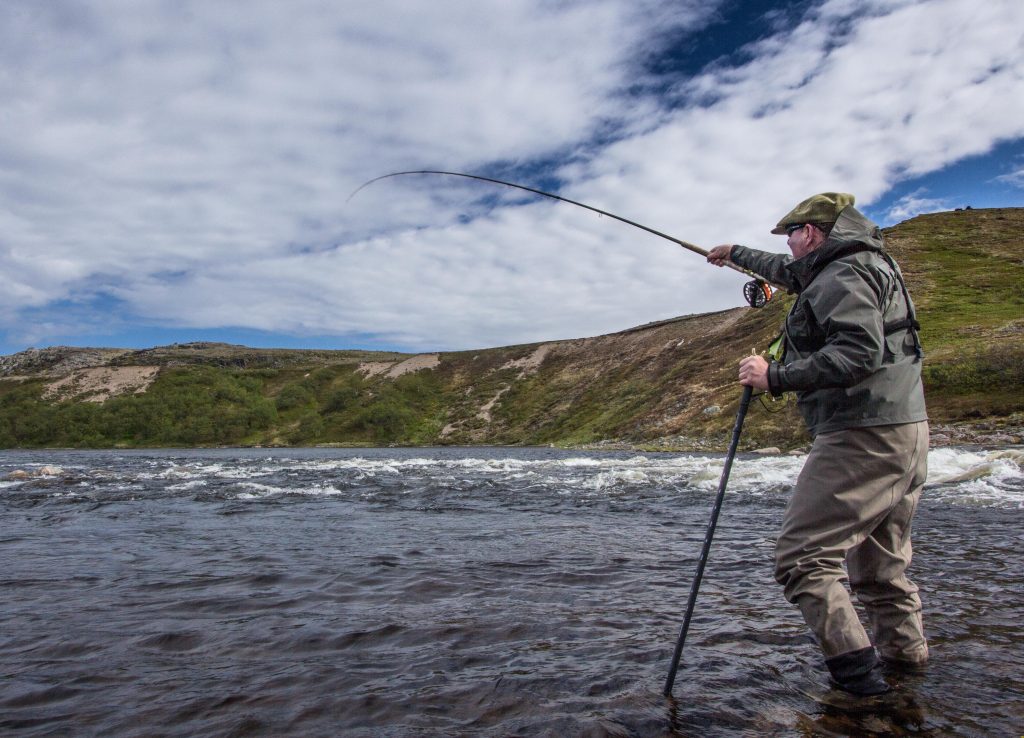
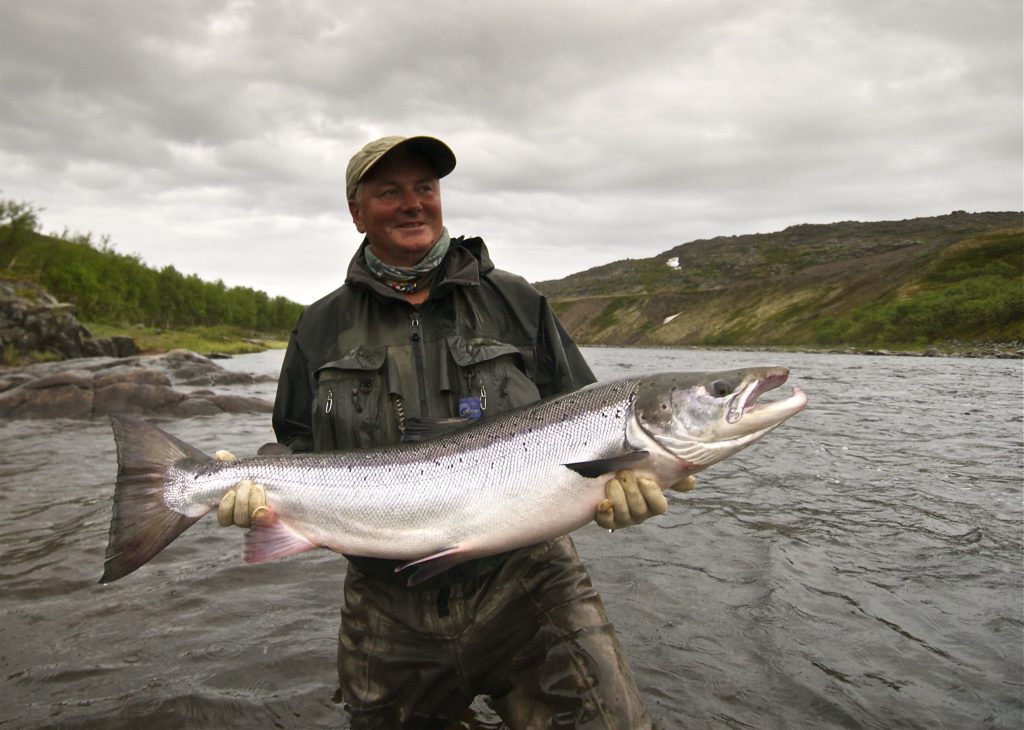
- providing methodological and practical assistance to the development of ecotourism and recreational fishing to be conducted in strict accordance with environmental laws and recreational fishing regulations, as well as directed activities oriented towards conservation of ichtyofauna and aqautic ecosystems.
- developing and implementing simple indicators and monitoring methods, accessible to “non-specialists” (staff of fishing enforcement, rangers, foresters, amateur fishermen, etc...), to establish a global observation network;
- purchasing, leasing and engaging in the active management of land along rivers requiring protection of wild salmon including, if possible, the establish non-governmental PAs on these territories, and the development of ecotourism and recreational fishing;
- developing effective means of combating poaching, including motivating land owners (leasors) by way of their own personal interest;
- entering into agreements with NGOs and private land owners (leasors) of salmon rivers and watersheds and or lands on which are found salmon watersheds, concerning land use with regards to wild salmon conservation;
- establishing joint programs with resource industries, to minimize negative impacts of their activities, as a means to protect salmon, under the auspices of a broader national “Rational Land Management Strategy”;
- developing science-based rules, principles and ethical norms of recreational fishing and ecotourism in salmon regions;
- studying and clarifying the effects of hatchery production and acclimatization, promotion of the conservation biology (and if necessary, restoration) of natural populations of wild salmon in their habitat, as an alternative to constructing salmon hatcheries;
- working with local administrations, in salmon watersheds, to adopt corresponding salmon conservation decisions on watershed use;
- establishing scientifically-based conservation and optimization models for salmon watersheds and ecosystem management, developing scientifically-based principles of wild salmon stock utilization and natural resource use in salmon regions;
- assisting in organizing, and participate in, a scientific impact studies (expertizas) evaluating the expedience of water use facilities (either new or existing);
- developing recommendations on possible regulation of commercial fisheries;
- conducting public environmental education, enabling public opinion to sway against poaching;
- gathering genetic material, representing the full spectrum of salmon biodiversity, and store it in a cryobanks.
* Arranged in accordance with priorities